
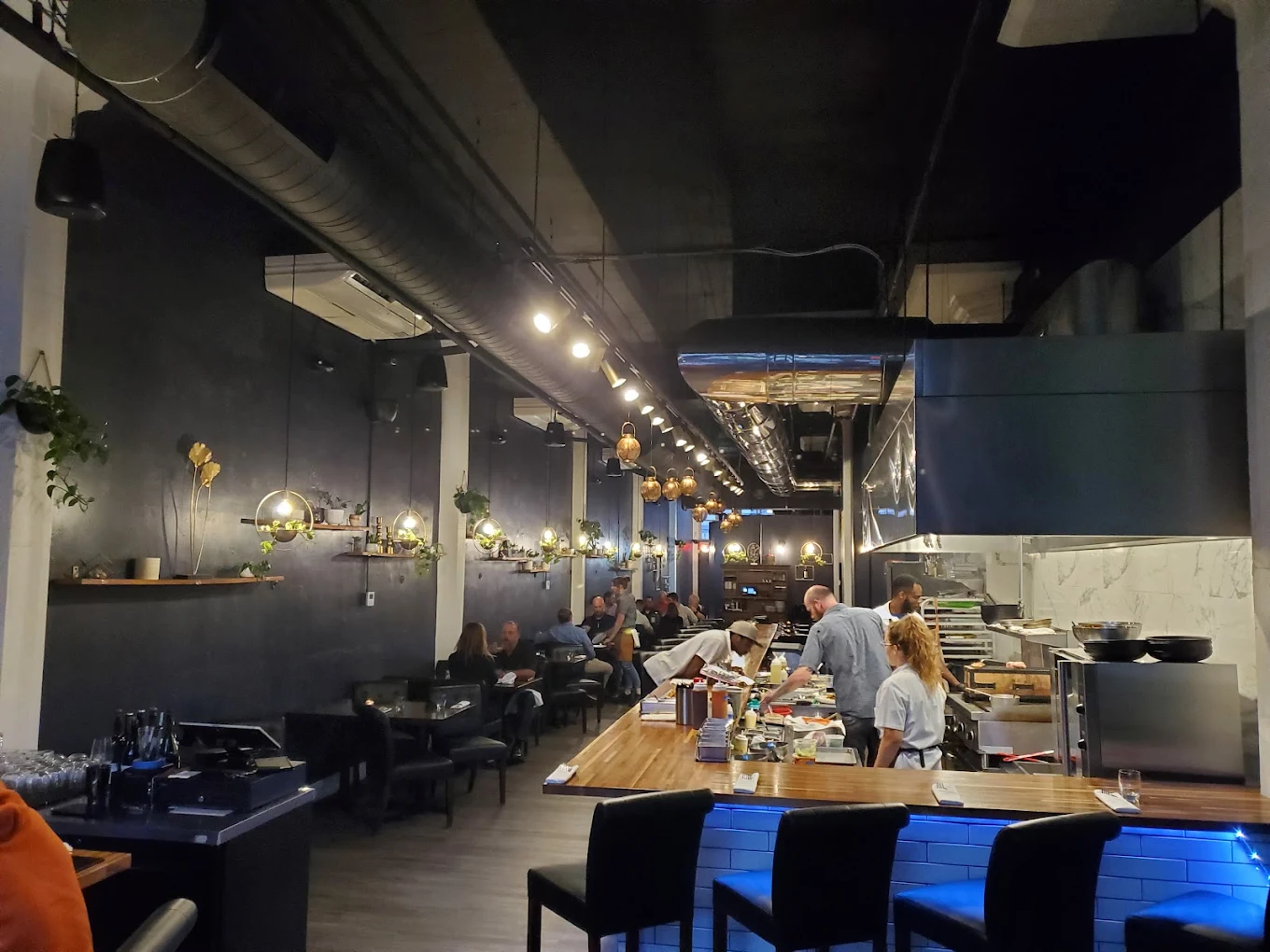
The culinary and hospitality industry is a dynamic, fast-paced environment where creativity meets complex operational logistics. Whether you are running an elegant fine-dining establishment in a metropolitan center, operating a high-volume fast-casual franchise, or steering a trendy neighborhood food truck, you are managing a business that faces an extraordinary concentration of daily risks. From kitchen fires and foodborne illnesses to slip-and-fall accidents and employee injuries, the potential threats to your cash flow and brand reputation are constant. This is why securing robust restaurant insurance is not just a regulatory hurdle—it is a foundational pillar of your long-term business continuity strategy.
Navigating the complex landscape of insurance for restaurants can feel overwhelming. With dozens of competitors in the insurance market claiming to offer the ultimate protection, making an informed decision requires a granular understanding of what these policies cover, why they matter, and how costs are calculated. This comprehensive guide breaks down every facet of commercial restaurant insurance, analyzing the key coverage elements, comparing the needs of different restaurant types, exploring real-world cost benchmarks, and showing you how to secure the best restaurant insurance quotes tailored to your unique kitchen operations. Regardless of what you are cooking, understanding your exposure ensures you stay protected through every shift.
1. Deciphering the Core Pillars of Restaurant Business Insurance
Every hospitality business requires a specialized portfolio of coverages bundled under a comprehensive restaurant business insurance framework. While generic business owner policies exist, a restaurant requires precise endorsements to account for food spoilage, liquor liability, and specialized kitchen equipment. Let us examine the foundational layers that form a bulletproof protection network.
General Liability Insurance
Often referred to as the bedrock of your protection strategy, restaurant liability insurance guards your business against third-party claims involving bodily injury, property damage, and personal or advertising injury. Consider the classic restaurant risk: a customer slips on a freshly mopped floor near the restroom or spills hot coffee on themselves due to a faulty lid. The ensuing medical bills, legal defense costs, and potential settlements are covered under your general liability policy. Without this coverage, a single slip-and-fall lawsuit could easily bankrupt an independent single-location establishment.
Commercial Property Insurance
Your physical assets—the brick-and-mortar building, the expensive commercial ovens, the custom-built bars, the walk-in freezers, and even the ambient dining room furniture—represent a massive capital investment. Commercial property insurance covers losses resulting from fire, windstorms, vandalism, or burst pipes. For food service operators, a property policy must be enhanced with specific endorsements like Equipment Breakdown Coverage (to protect against electrical surges that fry your walk-in compressors) and Utility Interruption Coverage (to cover losses when an off-site power failure knocks out your kitchen for days).
Business Interruption (Business Income) Insurance
If a fire damages your kitchen, your property insurance will pay to replace the charred stoves. However, who pays the rent, the key staff salaries, and the recurring utility bills while the restaurant is closed for three months of repairs? Business interruption insurance steps in to replace lost net income and cover ongoing operating expenses during a forced shutdown caused by a covered property peril. This coverage is frequently the thin line between a successful post-disaster reopening and permanent insolvency.
The Core Bundle (BOP): For many small to mid-sized food service businesses, carriers bundle General Liability, Commercial Property, and Business Interruption insurance into a cost-effective single package known as a Business Owner’s Policy (BOP). When searching for initial restaurant insurance quotes, asking for a specialized restaurant BOP is often the most practical and economical starting point.
2. Advanced and Specialized Coverages for Modern Food Service
As your operations evolve, generic coverages no longer suffice. The modern culinary industry demands targeted insurance products that address specific operational vectors, from the bar program to the digital POS systems.
Liquor Liability Insurance
If your establishment serves beer, wine, or craft cocktails, standard general liability insurance explicitly excludes claims arising from the sale or service of alcohol. If an intoxicated patron leaves your bar and causes a motor vehicle accident, your restaurant can be held legally responsible under state “Dram Shop” laws. Liquor Liability Insurance provides the legal defense and indemnity protection necessary to navigate these high-stakes claims. The scope of your beverage program—whether you are a hybrid brewery, a fine dining venue with an extensive wine list, or a high-volume nightclub—will heavily influence your overall restaurant insurance cost.
Workers’ Compensation Insurance
Kitchens are inherently hazardous environments. Heavy lifting, sharp knives, slick floors, and open flames create a perfect storm for workplace accidents. Workers’ compensation insurance is a statutory mandate in almost every state, covering medical expenses, rehabilitation costs, and lost wages for employees injured on the job. Implementing rigorous kitchen safety protocols, slip-resistant footwear mandates, and structured training programs can dramatically improve your experience modification rate (MOD rate), which is a key driver of your average restaurant insurance cost over time.
Food Spoilage and Contamination Coverages
Your walk-in coolers hold thousands of dollars in perishable inventory. A prolonged power outage, a mechanical failure of a compressor, or an unexpected contamination event can ruin your stock overnight. Food Spoilage coverage reimburses you for the wholesale cost of lost ingredients. Furthermore, Food Contamination Coverage protects you if a government health agency orders a temporary closure due to a suspected foodborne illness outbreak (e.g., E. coli, Salmonella). This coverage assists with the costs of cleaning the premises, replacing contaminated food, medical testing for employees, and even public relations campaigns to restore your brand reputation.
Cyber Liability Insurance
Modern restaurants run on digital infrastructure. From online ordering platforms and third-party delivery integrations to digital point-of-sale (POS) systems storing customer credit card data, food service businesses are lucrative targets for cybercriminals. If your system is breached or hit with ransomware, a cyber liability policy covers notification costs, forensic investigations, legal fees, and regulatory fines.
3. Custom-Tailoring Insurance: From Food Trucks to Global Franchises
The commercial insurance market is highly segmented. Different insurance companies have distinct appetites: some prefer high-volume franchise networks, others excel at covering independent single-location neighborhood gems, and some specialize exclusively in mobile food trucks. Finding a partner whose preferences align with your business type is the easiest way to lock in competitive premiums.
Independent, Single-Location Restaurants
For the independent operator running a single passion-project restaurant, agility and cost control are paramount. The risk profile is intensely localized. These businesses need an insurance broker who can benchmark policies across multiple boutique carriers to find highly competitive restaurant liability insurance without overpaying for unnecessary multi-state endorsements. Risk management focuses heavily on local staff training and immediate property maintenance.
Multi-Unit Franchise Operations
Franchise operations face unique administrative and contractual requirements. Corporate franchisors strictly mandate specific insurance limits, mandatory additional insured endorsements, and uniform coverage structures across all operating units. Carriers specializing in franchises offer corporate-compliant programs that can span multiple states, provide consolidated billing, and scale seamlessly as new territories open. Because of their high revenue and multi-site footprints, franchises require highly customized corporate asset protection policies.
The Mobile Food Sector: Food Trucks & Pop-Ups
Food trucks represent a fascinating insurance hybrid: part commercial auto, part retail kitchen. A food truck operator requires a specialized policy that bridges the gap between a standard commercial auto policy (covering the vehicle during transport) and an inland marine/property policy (covering the attached commercial cooking appliances, generators, and inventory when parked and operational). Traditional restaurant policies do not work here; specialized mobile food vendors require nimble carriers who understand the nuances of street vending, municipal permitting, and commissary kitchen operations.
Restaurant Type Primary Risk Exposures Critical Specialized Coverages Carrier Alignment Preference Independent Single-Location Localized slip-and-fall, localized brand damage, property fire, tight operating margins. BOP with Food Spoilage, targeted General Liability. Regional / Boutique niche carriers. Multi-Unit Franchise Contractual compliance, multi-state regulatory variances, employment practice claims. EPLI, Umbrella excess liability, corporate-compliant BOPs. National / Tier-1 standard commercial lines. Food Truck / Mobile Vendor Vehicle collisions, mobile generator failure, regional event liabilities, municipal hazards. Commercial Auto + Specialized Inland Marine, Event Liability. Specialty non-traditional / Program insurers.
4. Demystifying Costs: How Much Does Restaurant Insurance Cost?
When planning an annual operating budget, every restaurateur asks: how much does restaurant insurance cost? The answer depends on a multifaceted matrix of internal and external underwriting variables. Understanding these cost drivers allows owners to actively manage operations to compress their premiums.
The Core Drivers of Restaurant Insurance Premiums
-
Annual Gross Revenue: Total sales serve as a primary indicator of operational volume. Higher revenue equates to more foot traffic, more meals served, and higher statistical exposure to liability claims.
-
Square Footage and Location: A historic building in a high-crime or flood-prone urban area will cost significantly more to insure than a modern, code-compliant suburban strip-mall location. Regional weather patterns (such as coastal hurricane zones) drastically alter property premiums.
-
Type of Food and Kitchen Operations: An upscale sushi bar utilizing minimal open flame faces lower fire risks—but higher raw food spoilage risks—than a traditional Southern barbecue joint running wood-fired smokers 24/7.
-
Alcohol Sales Ratio: An establishment where liquor accounts for 60% of total revenue is underwritten as a bar/tavern, commanding substantially higher liquor liability rates than a family bistro where alcohol represents only 10% of sales.
-
Claims History: A clean loss-run report spanning three to five consecutive years signals to underwriters that your management team is highly risk-averse, qualifying your business for preferred tier rates and generous safety credits.
Average Restaurant Insurance Cost Benchmarks
To provide clear financial guideposts, let us examine the realistic premium ranges observed across the current commercial insurance marketplace for small to mid-sized culinary operations.
Insurance Policy Type Estimated Premium Ranges
Business Owner’s Policy (BOP) Monthly: $95 – $250 Annual: $1,140 – $3,000
General Liability Insurance Monthly: $65 – $150 Annual: $780 – $1,800
Liquor Liability Insurance Monthly: $50 – $175 Annual: $600 – $2,100
Workers’ Compensation Insurance Monthly: $120 – $350 Annual: $1,440 – $4,200
Commercial Umbrella (Excess) Monthly: $40 – $100 Annual: $480 – $1,200
Note: The figures listed above represent nationwide averages for independent small-scale restaurants. Actual restaurant insurance cost metrics can fluctuate significantly based on local state mandates, urban density, and exact liquor tracking configurations.
5. Step-by-Step Strategic Blueprint to Secure Accurate Quotes
Procuring a high-quality, comprehensively structured restaurant insurance quote requires proactive preparation. Treating insurance applications with the same rigor as an annual tax filing prevents coverage omissions and helps unlock underwriter discounts.
Step 1: Compile Comprehensive Operational Documentation
Before contacting an insurance broker or utilizing an online digital underwriting platform, organize your core business assets into a clean underwriting file. This proactive step dramatically accelerates the underwriting turnaround time. Your file should contain:
-
Verifiable revenue projections or historical tax returns for multi-year operations.
-
Detailed floor plans, copy of lease terms, and age profiles of key building systems (roofing, electrical, plumbing, HVAC).
-
Documentation of fire suppression infrastructure, including UL 300 certification compliance for commercial kitchen hoods.
-
Formal employee manuals, safety onboarding documentation, and written food hygiene protocols.
-
Historical loss-run reports spanning 3 to 5 years, officially generated by previous insurance carriers.
Step 2: Define Necessary Coverage Limits and Deductibles
Do not let a broker arbitrarily assign coverage thresholds. Work through your true exposure metrics. While a standard $1,000,000 / $2,000,000 general liability limit is the default baseline for small businesses, premium commercial locations or franchise arrangements frequently demand a $5,000,000 or $10,000,000 limit, achieved by overlaying a Commercial Umbrella policy. Carefully evaluate your deductible tolerances: opting for a $2,500 or $5,000 property deductible instead of a standard $1,000 deductible will immediately reduce your upfront monthly out-of-pocket premium payments.
Step 3: Partner with a Specialized Hospitality Brokerage
Avoid generalized insurance agents who primarily write personal auto or standard office policies. Partner with a dedicated independent commercial brokerage that commands deep, institutional relationships across the specialized food and beverage market. A hospitality broker has direct access to specialized programs, surplus line markets, and boutique risk pools that are completely inaccessible to standard consumer agents.
6. Actionable Risk Management: Compressing Your Premiums Long-Term
The smartest way to minimize your average restaurant insurance cost is to stop claims before they occur. Underwriters reward active, documented risk mitigation with preferred tier pricing structures.
Mandate Rigorous Fire Safety Compliance
Kitchen fires are the leading cause of structural property losses in the food service vertical. Ensure your kitchen strictly utilizes an active, regularly inspected UL 300 fire suppression system. Mandate semi-annual professional cleaning of all exhaust hoods, fans, and ductwork to permanently prevent dangerous grease accumulation. Keep Class K fire extinguishers highly visible and fully operational in immediate proximity to the cooking lines.
Institute Structured Safe-Floor Protocols
To compress the cost of your restaurant liability insurance, build a strict, non-negotiable culture around floor safety. Require all back-of-house and front-of-house employees to wear certified slip-resistant footwear. Deploy highly visible wet-floor signage immediately when spills occur. Ensure outdoor entryways are kept free of water accumulation, ice, or debris during inclement regional weather events.
Formalize Responsible Alcohol Service Training
If you operate a bar program, require 100% of your service staff, bartenders, and management team to complete certified responsible alcohol service programs, such as TIPS (Training for Intervention Procedures) or ServSafe Alcohol. Documenting this mandatory training program across your entire roster often qualifies your business for an immediate premium discount of up to 10% to 15% on your annual liquor liability policy.
7. Conclusion: Ensuring Long-Term Vitality in a Competitive Market
In a hyper-competitive landscape where dozens of market options compete for your business, securing the absolute best restaurant insurance is an exercise in strategic asset protection. Protecting your venture from ruinous lawsuits, unexpected equipment failures, and devastating physical perils requires looking far past the baseline cost of monthly premiums. It requires aligning your unique operation with carriers whose underwriting appetites perfectly match your concept—whether you are scaling a multi-site franchise brand, building an independent neighborhood institution, or taking a vibrant food truck concept on the road.
By learning the inner workings of commercial restaurant insurance, carefully preparing your documentation when seeking a restaurant insurance quote, and executing proactive kitchen safety protocols, you can easily minimize your long-term operational overhead. Do not wait for a critical compressor failure or a customer injury to test the validity of your policy limits. Partner with a specialized independent brokerage today, systematically audit your operational exposures, and ensure that regardless of what you are cooking, your culinary dream remains perfectly protected for decades to come.