
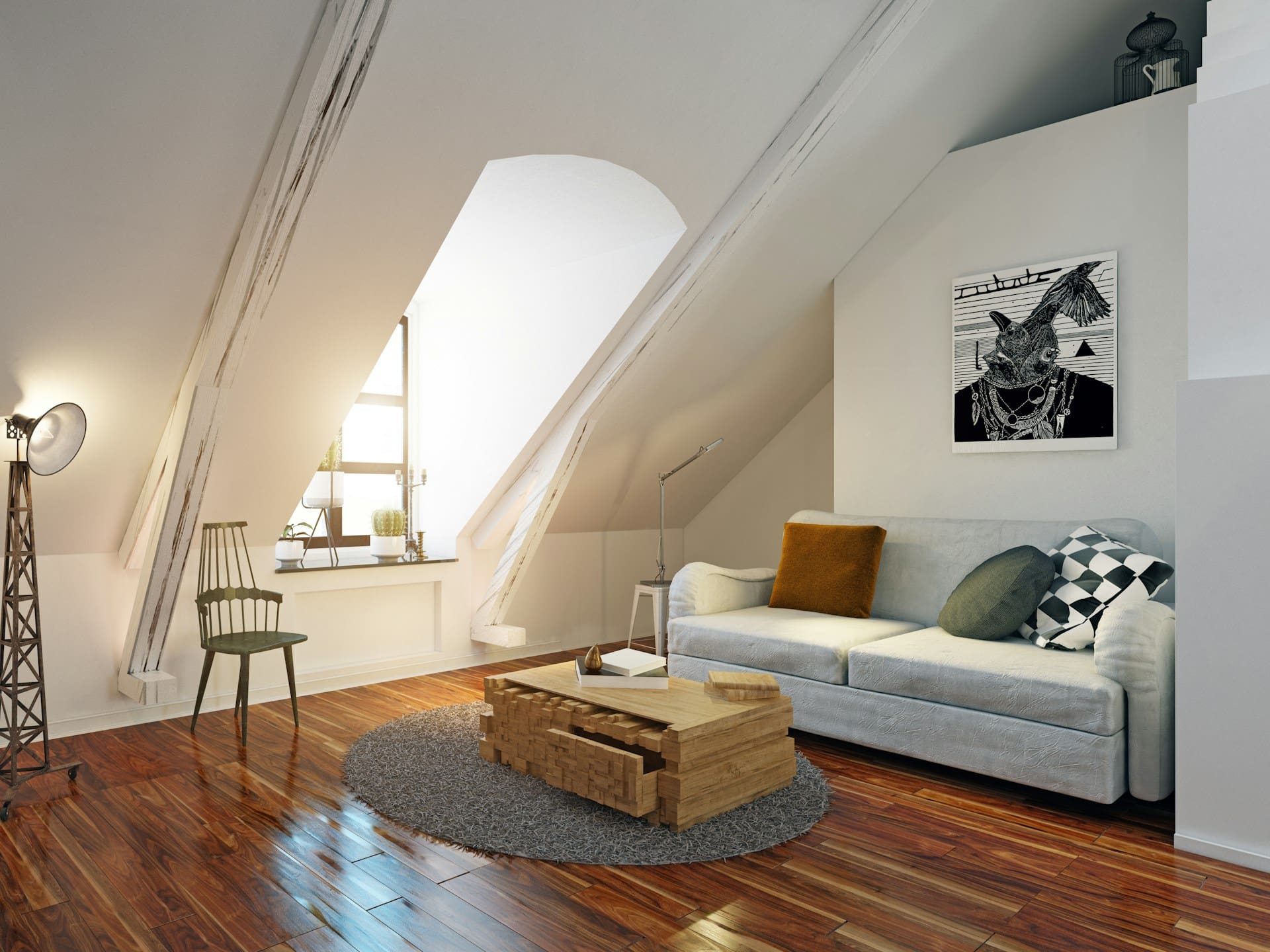
Renting out a basement or attic in Pennsylvania may appear to be a straightforward way to generate additional income, but from an insurance and regulatory standpoint, this decision can significantly change the risk profile of the property. Once a tenant occupies part of a home, that space is no longer treated merely as an extension of the owner’s living area. Instead, insurers, building officials, and in some cases local courts may view it as a distinct residential exposure, often analogous to a separate dwelling unit. This reclassification can affect how a homeowner’s or landlord policy responds to property damage, liability claims, and loss-of-rents situations.
This article provides a detailed, more academic-style overview of how basement and attic rentals are treated under Pennsylvania law and common insurance practices. It explains how building codes and zoning rules influence whether a space is considered a separate unit, outlines where standard homeowners policies tend to break down when there is undisclosed or informal rental activity, and describes key components of landlord insurance in Pennsylvania. It then discusses practical steps for evaluating a basement or attic rental, managing risk, and determining when a reassessment of coverage is warranted.
The focus is on Pennsylvania because state and local regulatory frameworks, as well as insurer underwriting norms, can differ materially from those in other jurisdictions. Property owners should always verify specific requirements with local code enforcement offices and licensed insurance professionals, but this analysis is intended to provide a comprehensive conceptual framework.
1. Legal and Regulatory Context in Pennsylvania
1.1 What Constitutes a Separate Dwelling Unit?
Under typical building and housing standards, a finished basement or attic does not inherently qualify as a distinct “dwelling unit.” Rather, officials look to functional characteristics. Although local codes vary, a space is more likely to be treated as a separate unit if it includes:
– Independent cooking facilities (kitchen or kitchenette, often including a stove or at least a fixed cooking appliance and sink)
– A full bathroom (toilet, sink, and either a shower or bathtub)
– Safe and code-compliant means of egress (both primary access and emergency escape)
– A configuration that allows the occupant to live there with a degree of autonomy, including the ability to lock and use the space without routinely entering the owner’s living area
Many Pennsylvania municipalities adopt, in whole or in part, versions of the International Residential Code (IRC) or International Property Maintenance Code (IPMC). These model codes typically define a dwelling unit as a single unit providing complete, independent living facilities for one or more persons, including permanent provisions for living, sleeping, eating, cooking, and sanitation. Although enforcement varies, this functional definition is critical: the more self-contained the space, the more it resembles a distinct unit in the eyes of both regulators and insurers.
In the specific context of basements and attics in Pennsylvania, regulators may scrutinize:
– Basement Egress: Requirements for egress windows, window wells, or exterior doors that meet specified size, height, and operability standards for emergency escape.
– Ceiling Height and Habitable Space: Minimum ceiling height standards (often 7 feet in habitable spaces under typical codes, subject to certain exceptions) and requirements for sufficient natural light and ventilation.
– Structural Integrity and Access: Safe stairways, proper handrails, and adequate headroom.
– Electrical and Mechanical Systems: Properly permitted wiring, safe placement and ventilation of heating equipment, and compliance with mechanical codes.
A basement with its own entrance, cooking facilities, and bathroom is often interpreted as a separate dwelling unit, even if the owner thinks of it as “just a finished space.” The same is true for an attic apartment with defined living, sleeping, and cooking areas. Insurers frequently rely on these functional features, sometimes more than local labels, when classifying the risk.
1.2 Zoning, Occupancy Limits, and Use Classifications
Zoning and occupancy rules vary across Pennsylvania municipalities but commonly distinguish between:
– Single-Family Dwellings
– Two-Family or Duplex Properties
– Multi-Family Buildings (e.g., Triplexes, Small Apartment Buildings)
– Accessory Dwelling Units (ADUs) and similar secondary units
– Rooming or Boarding Houses
– Student or Group Housing
A single-family dwelling with an occasional roommate is generally treated differently than a house that has been divided into separate apartments. When a basement or attic is converted into an independent unit, this may trigger reclassification from a single-family use to a two-family or multi-unit use under zoning ordinances. In college towns or areas with significant student housing, municipalities may have additional ordinances governing occupancy density, registration of rental units, and safety inspections.
Common compliance problem areas in Pennsylvania include:
– Basement apartments without required egress windows or doors
– Attic units with insufficient ceiling height or ventilation
– Steep, narrow, or otherwise noncompliant stairways
– Conversions undertaken without building permits or final inspections
From an insurance perspective, informal or unpermitted conversions present dual concerns. First, they may increase the likelihood or severity of loss (for example, due to inadequate egress during a fire). Second, they may create a discrepancy between the risk the insurer believed it was underwriting and the actual use of the property. Both aspects can complicate claim handling.
2. Insurance Foundations: Homeowners vs. Landlord Policies
2.1 Standard Homeowners Policies and Incidental Rental Use
Most standard homeowners policies (for example, ISO HO-3 or similar forms used by many carriers as a template) are designed for owner-occupied, one- to four-family dwellings. These policies assume that the primary use is personal residential occupancy by the named insured and their household members, with only limited, incidental rental exposure.
Incidental rental uses that are often contemplated in standard forms include scenarios such as:
– Renting out a single room to a boarder while the owner remains in the primary residence
– Occasional short-term rental (subject to policy terms) not constituting a primary business
– Limited rental of a separate structure, such as a garage apartment, when disclosed and properly endorsed
Problems tend to arise when a basement or attic is used as a full-time, self-contained rental apartment without being disclosed as such. In that situation, the risk begins to resemble a landlord or commercial exposure more than an owner-occupied homeowners risk.
2.2 Business or Rental Activity Exclusions
Homeowners policies commonly contain limitations or exclusions relating to business activities, including certain forms of rental activity. Although the exact wording varies by carrier, some policies:
– Exclude or limit liability coverage for claims arising out of business pursuits
– Treat extensive or continuous rental activity as a business exposure rather than incidental personal use
– Exclude or restrict coverage for structures used for business or rental purposes unless specifically declared and rated
If the rental of a basement or attic is substantial, ongoing, and integral to the property’s use, insurers may characterize it as a business activity. In such circumstances, a homeowners policy that was not underwritten with landlord exposure in mind may provide narrower or contested coverage, particularly for liability claims.
2.3 Distinctions Between Homeowners and Landlord Policies
Landlord policies (sometimes referred to as dwelling fire or rental dwelling policies, depending on form and carrier) are generally structured for properties where non-owner occupants reside in all or part of the premises. These policies anticipate:
– The presence of tenants rather than owner-occupants
– Risks associated with tenant negligence (e.g., cooking fires, improper use of space heaters)
– Liability claims brought by tenants or their guests
– Potential loss-of-rents exposures following a covered loss that renders the premises uninhabitable
While homeowners and landlord policies can sometimes be combined or endorsed for mixed-use situations (for example, an owner-occupied duplex), failing to disclose tenant-occupied units, especially those created by converting basements or attics, can cause significant coverage gaps.
3. Where Standard Homeowners Coverage Often Breaks Down
When a basement or attic becomes an informal, full-time rental unit in Pennsylvania, several specific coverage vulnerabilities tend to emerge.
3.1 Property Coverage for Tenant-Occupied Areas
Consider the following scenario: water backs up into a finished basement apartment and damages flooring, built-in cabinets, and other improvements associated with the tenant’s living space. A standard homeowners policy may:
– Provide only limited or optional coverage for water or sewer backup
– Not fully reflect the increased value of the finished, tenant-occupied space if those improvements were not disclosed
– Potentially treat some improvements as outside the contemplated scope of coverage if the basement was described as unfinished or non-habitable during underwriting
If the insurer understood the property to be an owner-occupied single-family home without a separate rental unit, it may scrutinize the claim more closely, particularly if the loss reveals a material discrepancy between the stated and actual property use.
3.2 Liability for Tenant Injuries
Liability exposures can be even more consequential. Assume that a tenant in an attic unit slips and falls on a steep staircase that does not meet current code standards, suffering a serious injury. If the policy is written as a standard homeowners policy for an owner-occupied single-family home, the insurer may question whether:
– The risk was accurately represented on the application
– The rental exposure should have been rated and underwritten as a landlord risk
– Any business or rental exclusions, or conditions relating to the number and type of units, affect coverage
While many homeowners policies do provide personal liability coverage for accidents occurring on the premises, undisclosed or misclassified rental exposures can complicate the insurer’s analysis of its obligations, especially if the policy contains language limiting coverage for business-related activities.
3.3 Fire and Major Losses Originating in Rental Areas
A common concern relates to fires that originate in tenant-occupied spaces. For example, if a tenant uses a space heater in the attic, leading to a fire that spreads through the entire home, the insurer may investigate whether:
– The presence of a separate rental unit was disclosed
– Any policy language conditions coverage on the accuracy of representations regarding occupancy and use
– The risk would have been rated differently, or a different form would have been used, if the rental unit had been fully disclosed
While Pennsylvania insurance law and policy language govern how misrepresentation and concealment issues are resolved, undisclosed material changes in use can affect the insurer’s willingness to accept a claim as presented or may influence coverage determinations.
4. Core Features of Landlord Insurance in Pennsylvania
A landlord policy suitable for Pennsylvania properties that include basement or attic rentals is typically designed to address the realities of tenant occupancy. Although terms vary among carriers, common components include:
4.1 Dwelling Coverage
Dwelling coverage protects the primary structure itself against covered perils, which may include fire, windstorm, hail, and other specified or open-peril risks, depending on the form. In the context of a basement or attic rental, it is important that:
– The policy’s insured building value accurately reflects improvements such as finished basements, completed attic build-outs, and additional kitchens or bathrooms.
– Any structural modifications made to create the rental unit have been disclosed, including added walls, stairways, or separate entrances.
Underinsurance, where the coverage limit is lower than the true replacement cost, can result in coinsurance penalties or inadequate settlement amounts following a major loss.
4.2 Other Structures and Appurtenant Installations
Some properties include detached garages, sheds, or external stairways used by basement or attic tenants. Landlord policies often provide coverage for such “other structures,” but it is important that:
– Structures used in connection with the rental (e.g., an external staircase that provides access to an attic unit) are appropriately documented.
– Any additional separate structures used as rental units themselves (e.g., a detached carriage house) are disclosed so that the carrier can rate the full exposure.
4.3 Loss of Rents Coverage
Loss of rents, or loss of use coverage tailored for landlords, can be critical in Pennsylvania, especially where severe weather or fires render properties uninhabitable. When a covered peril forces tenants to vacate a basement or attic unit, this coverage can help replace lost rental income during the reasonable period of repair, subject to policy limits and terms.
Key considerations include:
– Whether the stated rental income accurately reflects the actual rents received from the basement or attic unit.
– Whether short-term or variable rental arrangements (such as furnished short-term leases) have been described, as these may affect underwriting.
4.4 Landlord Liability Coverage
Landlord liability coverage is specifically designed to address claims by tenants, their guests, or others who allege bodily injury or property damage arising out of conditions on the premises or the landlord’s operations.
In the context of Pennsylvania basement and attic rentals, landlord liability coverage is particularly relevant to:
– Slip-and-fall incidents on interior or exterior stairs
– Injuries related to alleged defects in railings, flooring, or lighting
– Claims of inadequate security or habitability conditions that contributed to injury
Although liability coverage does not guarantee that all such claims will be paid, it provides legal defense and, where applicable, indemnity up to policy limits, subject to exclusions and conditions.
4.5 Supplemental Coverages and Endorsements
Owners of Pennsylvania properties that include basement or attic rentals often consider additional coverages, such as:
– Sewer or Drain Backup Coverage: Particularly important for below-grade spaces, where heavy rain and saturated soils can lead to sewer or sump pump backup. Standard policies often provide limited or no coverage for this peril unless specifically endorsed.
bGiven construction cost volatility and storm-driven losses, extended replacement cost coverage can help address cost overruns when rebuilding a structure that includes finished basements or attic units.
– Equipment Breakdown: Coverage for mechanical systems such as boilers, furnaces, and central air conditioning, which can be especially important when tenants are located near critical mechanical rooms or in areas (such as basements) prone to moisture-related issues.
– Personal Injury Liability: In some policy structures, endorsements provide coverage for certain types of personal injury claims, which may include allegations connected to wrongful eviction, invasion of privacy, or libel and slander in the landlord-tenant context, subject to policy language.
5. Evaluating a Basement or Attic Rental in Practice
5.1 Functional Assessment: Does It Operate Separately?
A useful way to analyze a basement or attic rental is to ask whether, in practice, it functions as its own dwelling unit. Questions include:
– Entrance: Does the occupant primarily use a separate entrance, such as a side door, rear door, or exterior stairway? If so, this signals separation.
– Facilities: Is there a full bathroom and a kitchen or kitchenette within the rented area, or does the tenant rely on shared facilities within the main living area?
– Privacy and Control: Can the tenant lock and use the space independently, without entering the owner’s living quarters on a regular basis? Are there separate bedroom, living, and cooking zones within the space?
– Economic Arrangement: Is there a written lease, a regular rental payment schedule, and an understanding that the space constitutes the tenant’s primary residence or a designated rental unit?
If the answer to several of these questions is yes, many underwriters are likely to treat the property as more than a simple owner-occupied single-family dwelling with a spare room. Depending on layout and occupancy, the risk may be categorized as:
– A single-family home with a rented room
– A two-family or duplex-style property
– A property with an accessory dwelling unit (ADU)
– A boarding or shared housing arrangement
Each classification may correspond to different rating factors, policy forms, and underwriting guidelines.
5.2 Documentation and Disclosure
Clear documentation can assist both regulators and insurers in accurately assessing the risk. Material items include:
– Photographs: Images showing the layout, exits, windows, and stairways.
– Floor Plans: Even simple hand-drawn plans that indicate room usage, access points, and separation between the owner’s area and the rental unit.
– Permits and Inspection Reports: Evidence that conversion work (e.g., finishing a basement, adding egress windows, installing a bathroom) was performed under proper permits and inspected to code.
– Leases or Rental Agreements: Written contracts that clarify who occupies the space, the duration of occupancy, rent amounts, and basic responsibilities for maintenance and utilities.
From an insurance standpoint, providing an accurate and detailed description of the property’s use, including the existence of a distinct basement or attic rental, enables the carrier to match the exposure to an appropriate landlord form and rating methodology.
5.3 Seasonal and Structural Risk Considerations
Pennsylvania’s climate and geography introduce specific seasonal risks that can be particularly relevant to basement and attic rentals.
– Basements: In spring and early summer, heavy rain and saturated soil can increase the likelihood of water intrusion, sump pump failures, and sewer or drain backups. Basements also tend to be more susceptible to moisture, mold growth, and air quality concerns, which can give rise to tenant habitability complaints.
– Attics: Attic spaces often experience higher temperatures in warm months and are directly affected by roof conditions. Wind and hail events can compromise roofing materials, leading to leaks and potential water damage in attic units. Ventilation issues can exacerbate heat buildup and humidity, increasing the risk of deterioration or mold.
These environmental factors interact with insurance coverage in several ways. They may influence the desirability of supplemental endorsements, such as water backup coverage, and may also increase the importance of regular maintenance and inspection (e.g., roof condition, gutter systems, drainage routing away from foundation walls).
6. Managing and Reassessing Coverage Over Time
Use of a property often changes more quickly than insurance programs. Landlords may continue renewing the same policy year after year while making substantial alterations to how the premises are occupied. Regular reassessment is therefore prudent.
6.1 Triggers for Reviewing Coverage
Owners should consider a thorough review of their insurance arrangements when they:
– Add a new basement or attic tenant for the first time
– Convert a prior roommate arrangement into a fully separate, self-contained unit with its own facilities
– Transition from long-term leases to short-term or rotating guests (for example, furnished rentals or short-stay bookings)
– Move out of a previously owner-occupied home and convert it entirely to rental use
– Acquire additional rental properties in Pennsylvania or in other states, or transfer ownership into an entity such as a limited liability company (LLC)
In each case, the nature of the risk changes, sometimes significantly. Occupancy type, number of units, and the presence of tenant-occupied spaces all influence how a property should be scheduled and rated.
6.2 Adjusting Building Values and Limits
Finishing a basement or building out an attic can substantially increase the cost to rebuild a home after a major loss. Failing to adjust coverage limits accordingly can result in underinsurance.
Owners should verify that:
– The current dwelling limit reflects the full replacement cost of the structure, including all completed improvements.
– Any ordinance or law coverage (which addresses the extra expense of rebuilding to current codes) is adequate, especially where an older home has been informally converted into multiple units.
Pennsylvania building and housing codes evolve over time. Following a total or major loss, local officials may require that a rebuilt structure fully comply with current standards. If the older conversion would not be grandfathered without upgrades, ordinance or law coverage can be particularly important.
6.3 Coordinating Insurance with Risk Management Practices
Insurance is only one component of effective risk management for basement and attic rentals. Owners should also consider:
– Regular Inspections of stairs, railings, lighting, smoke detectors, and carbon monoxide detectors
– Maintenance of Mechanical Systems such as furnaces, boilers, and electrical panels
– Documentation of Tenant Communications, including repairs and complaints
– Clear Lease Provisions regarding the use of space heaters, candles, and other potential fire hazards
These practices can reduce the likelihood of loss and strengthen the owner’s position if a claim or liability allegation arises.
7. Conclusion
Renting out a basement or attic in Pennsylvania has implications far beyond the monthly rent check. From the perspective of building codes, zoning ordinances, and insurance underwriting, a finished and independently functional space is often treated as a separate dwelling exposure rather than simply an extension of the owner’s living area. This shift affects how policies are structured, how claims are evaluated, and what forms of coverage are appropriate.
Standard homeowners policies are typically designed for owner-occupied risks with incidental rental activity. When a basement or attic becomes a full-time, self-contained rental unit, undisclosed or informal use can expose property owners to gaps in both property and liability coverage. Landlord insurance, by contrast, is configured around tenant occupancy and can provide more suitable protections, including dwelling coverage calibrated to the improved structure, loss-of-rents protection following covered losses, and landlord-oriented liability coverage.
Careful functional assessment of the space, thorough documentation, and candid disclosure to insurers are critical. Pennsylvania property owners should periodically reexamine their insurance arrangements whenever they modify the use of basements or attics, change leasing patterns, or invest in additional rental properties. By aligning coverage with the real use and risk characteristics of the property, owners place themselves in a stronger position to protect both their investment and their financial stability in the face of unforeseen events.
This article is intended as a general, educational overview and does not constitute legal or insurance advice. Specific policy language, underwriting guidelines, and municipal regulations can vary. Property owners should consult their local code officials and a licensed insurance professional for advice tailored to their particular circumstances in Pennsylvania.
Protect Your Rental Investment With the Right Coverage Today
If you own rental property, now is the time to make sure it is protected with tailored coverage that actually fits your risks. At Ingram Insurance Group, we help landlords choose the right landlord insurance in Pennsylvania so you are prepared for the unexpected. Reach out so we can review your current policy, identify any gaps, and walk you through clear options. If you are ready to take the next step, simply contact us and we will get started.





